Our Facility
Growing Spaces
Plots
Raised Beds
Polytunnel Spaces

Allotment Plots
Our plots are 15 x 15 feet and are not separated by any boundaries. We believe this allows for more opportunities for conversations between allotment holders.

Raised Beds
Raised beds allow for more accessibility for growers who may have disabilities. They are also a more manageable size for someone who might be fearful of committing to a full size plot.

Polytunnel Access
Having access to polytunnel opens up so many option for more tropical fruit and veg. Another benefit is the extension of the growing season.
Recreational Spaces
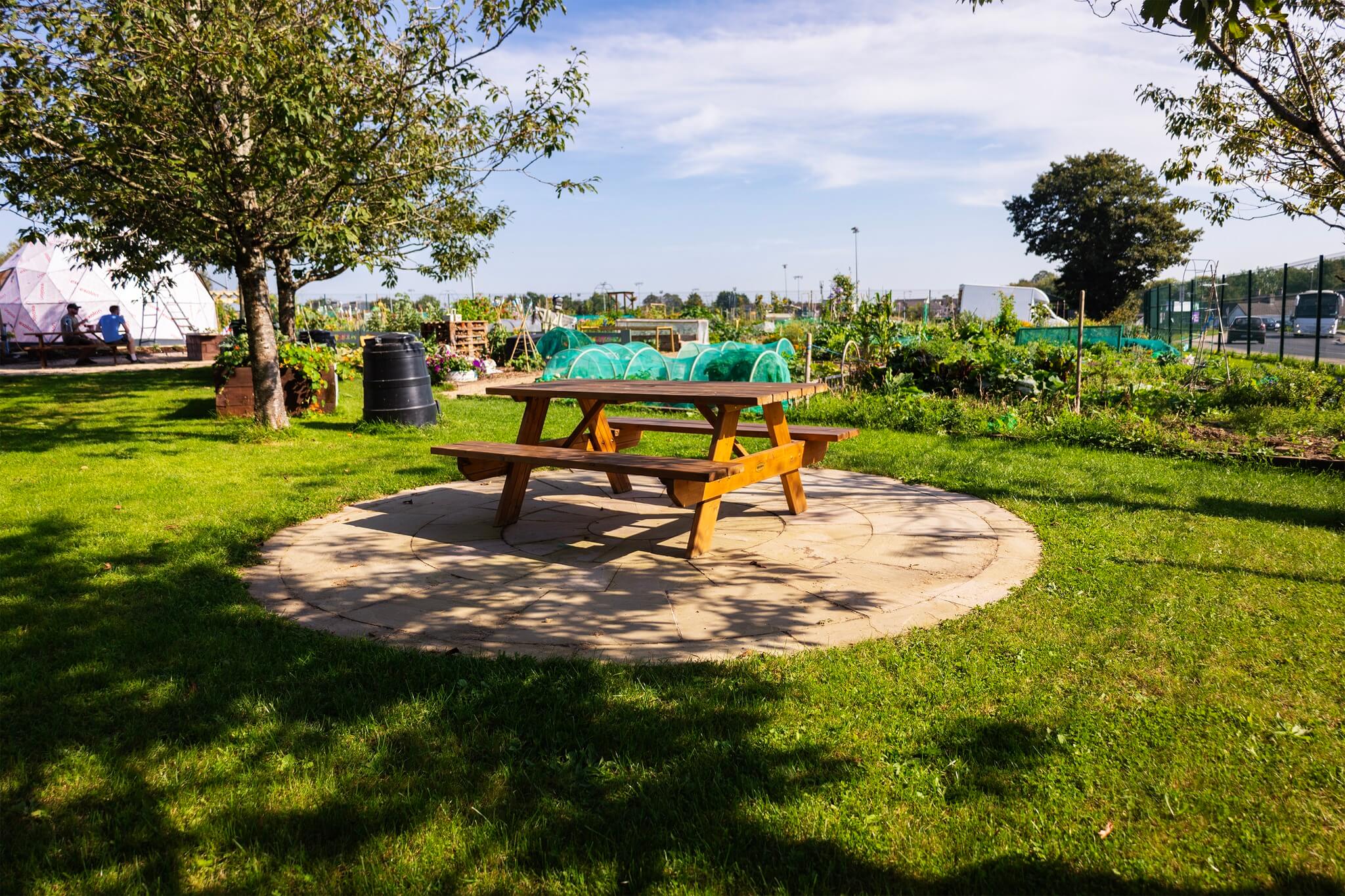
Seating areas where people can rest and mingle with fellow allotment holders were an important part of the plans for Enniscorthy Community Allotments. Community is key to this project and social areas for people to meet for a chat are dotted throughout the allotments.

Classes & Demonstrations
A place that is not only visually stunning but a place of learning and utility. Our newest installation of a geodesic dome will give us a tranquil learning space at the end of our sensory walk.

Sensory Walk
A lovely walk for all our members to engage with nature using all their senses and connecting to the beautiful environment around them.

Composting Area
We have many composting areas that are set up to educate people on the different methods of using food and garden waste.
Training Greenhouse
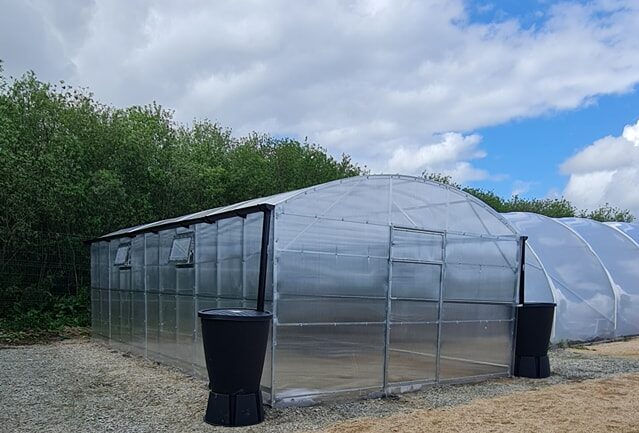
We facilitate training and demonstrations in our greenhouse space. Located behind our polytunnel and beside our concrete block composting area.
FAQ
Why have an allotment?
- An allotment is a great way to ensure you get a regular supply of fresh fruit and vegetables
- Exercise – Keeping an allotment is a great form of exercise. From the more intensive clearing process to the planting and watering later on, this is a brilliant form of exercise because you get to decide the pace
- You eat more fruit and vegetables. They are free of pesticides – If you do your homework and plan your new allotment carefully, before long you’ll have more than enough homegrown, pesticide-free, super-nutritious fruit and vegetables. Whether you’re trying to eat a little healthier or just can’t get enough of fresh peas, getting an allotment is a great way of encouraging a more nutritious diet.
- Help the environment – Allotments are good for the environment because growing your own food will reduce your personal carbon footprint compared to shop bought alternatives and you will limit the packaging used. Growing organic vegetables will also benefit the environment as you help limit the amount of pesticides and other harmful chemicals in the soil.
- Sense of community – Keeping an allotment is a great way of making friends. You’ll quickly get a sense of your ‘neighbours’ and the allotment community to which you belong. While there are many joys of allotments, from fresh air to homegrown produce, looking after your little plot makes you an active part of the local community.
- Routine, project work and daily maintenance – If you have recently retired and struggle a little with the lack of daily tasks and routines, keeping an allotment could be the perfect solution. As well as keeping you busy, maintaining an allotment is a project which requires planning. Seeing a project through from start to finish or, in allotment terms, from clearing to produce can be extremely rewarding.
- Saves you money – Once you get the hang of things and your allotment starts to give back growing your own produce can be a very cost-effective way of living, especially if you grow perennial fruit and vegetables.
How much time will it take, and will it be a lot of work?
This is down to you, but you’ll probably find that once you start planting things, you will need a minimum of four or five hours a week to keep things ticking over in terms of weed and pest control, planting and picking the produce.
What tools will I need to work my plot?
A spade and a fork for digging, a small trowel for planting and digging out weeds that a fork won’t remove, a hoe for weeding, and a rake for preparing seed beds and a watering can. For starting seedlings off in polytunnel you will need seed trays, compost and small pots. There are come communal tools available on site, but these are very limited, and it is best to have your own tools.
Can I put up a shed?
Due to the size of our plots, we do not permit sheds, greenhouses, or large structures on plots. Arches for peas and beans can be permitted with consultation and approval from the committee.
Can I have a bonfire on my allotment?
No bonfires are allowed on site.
Got more questions? Visit our Frequently Asked Questions page for details on membership, costs, opening hours, and more.